

How Many Times Has the World Ended?
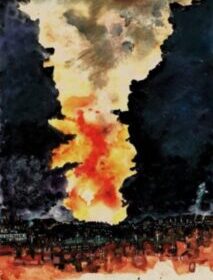
By Alastair Donald | 08 February 2013 You may recall that the world should have ended recently, on December 21, 2012, to be precise. As it rather smugly reported on the preparations being made around the world for the coming apocalypse, the Guardian reminded us that the Maya Long Count calendar read ‘13.0.0.0.0’ (‘thirteen b’aktun’) for the first time in 5,125 years, and this it was believed by some,...

Military Urbanism?
‘Cities Under Siege: The New Military Urbanism’ by Stephen Graham; Verso, 2011. 402pp Reviewed by Austin Williams | 18 December 2012 Urban transformation has often been considered to be a virtue, but some view it differently; as a source of instability and conflict. The United Nations calls cities “dynamic centres of creativity, commerce and culture” but adds that they are “better known for their chaos and grime”....
The Great Stagnation
Instead of focussing merely on the recent period of financial turmoil, The Great Stagnation encourages a longer term view.
Britain after the riots
This book presents arguments that almost completely undermine the independence of children as well as adults.
I run therefore I am!
‘It is the presence of competition itself that acts as a permanent barrier between the two types of runner’
Keeping it Real in the ‘Fictitious Capital’
By Andrew Calcutt | 9 October 2012 Foolish to judge a whole book on this basis alone; but if the design on the front doesn’t give you the gist of what’s between the covers, its editors should be shot. The front cover of a new book London After Recession depicts the eponymous city as a ‘fictitious capital’, existing in a think-bubble dreamed up by a bowler-hatted gent of possibly Asian extraction. Of course the subtitle ‘a fictitious...
Looking back today
‘Everything Was Moving: Photography from the 60s and 70s’ at the Barbican Art Gallery; 13 Sep 2012 – 13 Jan 2013. Reviewed by Pauline Hadaway | 27 September 2012 From iconic portraits of Dylan, Che and Martin Luther King, to history making shots of civil rights marchers, students on the barricades and draft card burning, many of the images that we think of as defining sixties and seventies radicalism remain part of...
FROM THE FUTURE CITIES ARCHIVE
Lost in Space’ by Greg Klerkx: A review by Martin Earnshaw Neil Armstrong, who died last month, encapsulated humanity’s desire for exploration and discovery, and is believed to have been dismayed at NASA’s diminished ambitions. Here Martin Earnshaw assesses Klerkx’s claim that NASA is the main barrier to realising a human future in space. ‘Lost in Space: The Fall of NASA and the Dream of a New Space Age’...
The Olympics… as seen from the other side of the world
Xu Xiangru | 01 September 2012 Despite the pessimism in advance of the games, in the UK they have been widely viewed as a success. Here a Chinese student reflects on what the Olympics mean to the Chinese at a special period in their history. From Sun Yang’s world record in the 1500m freestyle to Ye Shiwen in the women’s 400m individual medley, shocking news has never been far away from the media coverage of these Olympics in China....
Emerging Africa
‘Emerging Africa: how 17 countries are leading the way’ by Steven C. Radelet; Center for Global Development, 2010. 169pp Reviewed by Joel Cohen | 22 August 2012 On the 50th anniversary of the publication of Things Fall Apart, Nigerian author Chinua Achebe was asked “Are things really falling apart or are they starting to come back together in Africa?” His reply was incisive: “It’s always happening both of them. It depends on where you...
Listen in

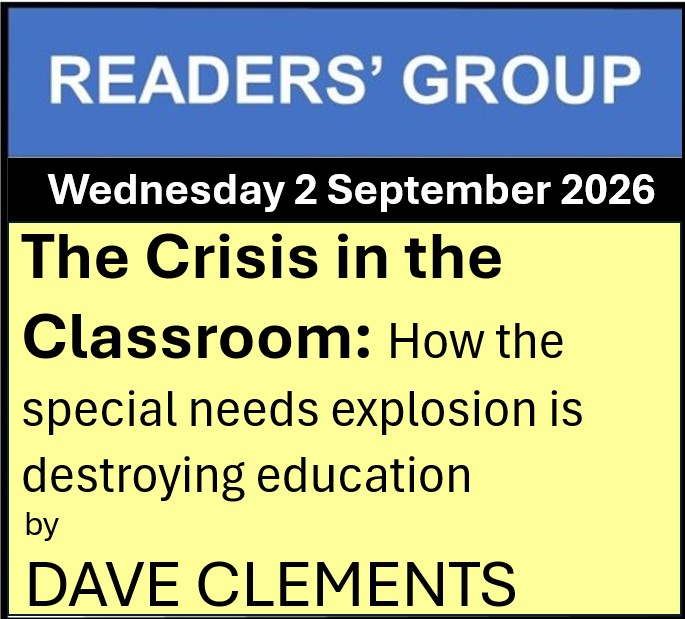
Next meeting

Publications
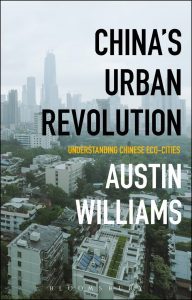

NEW TITLE