BEST BOOKS OF 2025
 As we reach the end of a challenging year, the Future Cities Project Readers’ Group and “What The Papers Say” review regulars have chosen their favourite books of the past year. If you are looking for stocking fillers for Christmas 2025, or great books to catch up with in 2026, read on.
(Click on images for links)
Martin Earnshaw chooses:
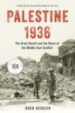 Palestine 1936: The Great Revolt and the roots of the Middle East conflict, by Oren Kessler, Rowman & Littlefield, 2025, pp334
A rich account of the Arab Revolt of 1936, the true start of the Arab-Israeli conflict, yet paradoxically its most overlooked chapter. Kessler avoids easy partisanship, looking at the unfolding conflict through the eyes of the main Jewish, Arab and British protagonists. It also reveals how the rise of fascism in Europe and the looming shadow of the Second World War helped shape the Middle East of today. Essential reading for everyone who wants to understand the most intractable conflict of our time.
Austin Williams chooses:
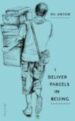 I Deliver Parcels in Beijing, by Hu Anyan, translated, by Jack Hargreaves, Allen Lane, 2025, pp319
An exhausting insight into how China’s workshops of the world really survive. This book exposes the underbelly of China’s entrepreneurial wealth, reliant on an underclass of poorly paid, exploited, ill-treated, but aspirational couriers, delivery-drivers, fixers, assistants and a range of similarly underappreciated grafters. Written in a casually reflective style by someone who has experienced it all.
Geoff Carter chooses:
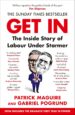 Get In. The Inside Story of Labour Under Starmer, by Patrick Maguire and Gabriel Pogrund. Penguin Books. 2025, pp480
The resistible rise of Keir Starmer. The man with no ideology, no principles, and even no favourite book. A forensic investigation of how a faction ruthlessly seized control of Labour with a front man full of ambition and not much else. With the potential break-up of the two-party duopoly the consequences of Labour failure are all too evident.
Shelagh McNerney chooses
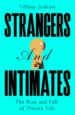 Strangers and Intimates: The Rise and Fall of Private Life, by Tiffany Jenkins, Picador, 2025, pp464
In a year of economic and social conflicts and many emerging violent extremes, the focus of this book on the very human condition of privacy feels both important and comforting to engage with. Individual conscience seems to be all that remains in a “society” and a “state” that thrives on telling us what to think. It is not a call to action nor a manifesto but the very subject matter brings into focus a 2025 world.
Jan Bowman chooses
 The Day Everything Changed: Ten Stories from October 7, by Or Yogev et al, Yuka Books, 2025, pp220
A graphic adaptation by ten artists of ten stories from October 7. Some beautiful drawings, and very moving. Gives you a sense of how tiny Israel is (in a couple of stories people bump into old acquaintances in the midst of mayhem) and of the heroism and humanity that holds this besieged, indefatigable country together.
Jon Bryan chooses:
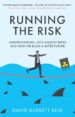 Running the Risk: From Shark Attacks to Nuclear Disaster – Understanding Life’s Biggest Risks and How We Build a Safer Future, by David Reid, Hero, 2025, pp328
David Reid draws on a huge historical memory to thoroughly illustrate and examine this subject. The range of issues he has researched means there’s bound to be an area of life in here which is of interest to you. The book is well-structured, showing how risks have changed and how our perceptions of risk can alter according to time and place. Reading this shows us how the risks posed by Covid-19 are just a small part of human history, which is an important reminder for us all.
Sue Davis chooses:
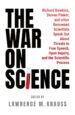 The War on Science: Renowned Scientists and Scholars Speak Out About Current Threats to Free Speech, Open Inquiry, and the Scientific Process, Lawrence M. Krauss (ed), Forum, 2025, pp304
A passionate expose of the dangerous drift towards bureaucratic overreach in science. The essays, written by an expert group of contributors, highlight immediate problems facing science today, particularly the rise of ideological restrictions in academia, threats to free speech, academic freedom and open inquiry. They give vivid and disturbing first-hand accounts of ideological corruption in science and academia, from both the left and right. This collection is recommended for readers concerned in the future of scientific progress.
Alex Cameron chooses:
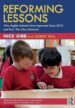 Reforming Lessons: Why English Schools Have Improved Since 2010 and How This Was Achieved, by Nick Gibb and Robert Peal, Routledge, 2025, pp262
Few people, even among committed educationalists, would describe many books on education as inspiring, but Reforming Lessons is just that. A first-hand account of the reforms that have been applied to English schools (education is a devolved matter in the UK) since 2010. One immediate impact has been to arrest English schools’ decline in international league tables. The authors prove that reform in education is not only necessary but possible. They show that reform can deliver demonstrable successes in key areas from pupil behaviour to the knowledge-rich curriculum. Essential reading for anyone interested in education.
Mischa Moselle chooses:
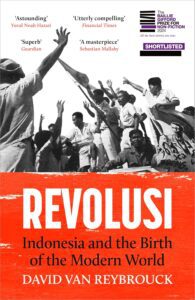 Revolusi. Indonesia and the Birth of the Modern World, by David Van Reybrouck, Vintage, paperback 2024, pp641
So often in the world’s peripheral vision, Indonesia’s independence was won through its peoples’ adoption of Islamism, Communism and nationalism, some core ideologies of the 20th century. The narrative history interwoven with eyewitness accounts compellingly details Indonesia’s struggle against Western and Japanese colonialism and fascism, with voices from all sides and classes. If this book piques your interest in the country, I suggest moving on to the wonderful literary fiction of Pramodya Anata Toer.
Elisabetta Gasparoni chooses:
 Alfred Dreyfus. The Man at the Center of the Affair, by Maurice Samuel, Yale Universsity Press, paperback 2025, pp209
A fascinating analysis of the historical events that led the French Captain Alfred Dreyfus becoming a symbol of antisemitic persecution. Denounced by antisemites and falsely accused of committing treason, Dreyfus was imprisoned to an island prison off the coast of French Guiana. The fight to prove his innocence divided the French nation and Samuel is superb in describing how the Dreyfus affair raised fundamental questions about the nature of liberal democracy and the form of government that guaranteed rights to the individual through the rule of law at the turn of 20th century in France.
Sally Taplin chooses:
 When Everyone Knows that Everyone Knows: Common Knowledge and the Science of Harmony, Hypocrisy & Outrage’, Steven Pinker, Allen Lane, 2025, pp300
Pinker’s latest book tackles the day-to-day phenomenon of common knowledge – something we intuitively understand but never step back to inspect. It describes the act of thinking about what other people think, and how other people think they think about what they think. What sounds like a mental Escher drawing turns out to be a critical part of how we understand what is going on around us in society and organisations. It forms part of our capacity for reason: our ability to apply rationality, to reflect on it, and to devise better solutions. Pinker makes the case for why common knowledge matters as part of human intelligence, and why we need to let it continue to develop rather than allow it to be disrupted by ideologies and structures that prohibit and police the way we think and express ourselves. Common knowledge helps us make sense of the world.
Nico Macdonald chooses:
 Abundance: How We Build a Better Future, Ezra Klein and Derek Thompson, Profile Books, pp304
After the absent presidency of Joe Biden, and the failed “Nazis and vibes” campaign of former Vice-President Harris, the Democratic party needs a new approach, beyond social justice and state-level pork-barrelling. In this tome , the two tyros propose a policy narrative around growth, offering US citizens “promise rather than just peril”. They seek to address the entrenched, systemic problems in which the US seems mired, from climate change to housing, education to healthcare. Though the authors are still mired in Democratic Party obsessions, such as climate change, this is a book from the Left on aspirations for the future.
_________
These show just some of the range of interests in our Readers’ Group and “What The Papers Say” Review Groups. We run the only non-fiction readers group in the country*. I hope that these suggestions inspire you to delve into these varied subjects and explore further, read more, discuss more widely in 2026.
Don’t forget to browse our Five Critical Essays series, here.
HAPPY NEW YEAR!
*so we understand